
Quick Answer
Most granulator knives are sharpened based on machine performance rather than a fixed schedule. If you’re seeing more dust, lower throughput, inconsistent regrind, or higher amp draw, it may be time to inspect and sharpen the knives.
If your granulator is producing more dust than usual, struggling to maintain throughput, or drawing more power than normal, dull knives may be part of the problem.
Granulator knives are among the most important wear components in the size reduction process, yet many processors aren’t sure how often they should be sharpened. The reality is that there is no universal maintenance schedule. Knife life can vary significantly depending on material type, throughput requirements, operating conditions, and equipment configuration.
At Cumberland, we regularly work with processors looking to improve granulator performance, maintain regrind quality, and extend equipment life through proper maintenance practices.
Rather than relying solely on a calendar-based maintenance schedule, it’s often more effective to monitor machine performance and watch for signs that indicate maintenance is needed.
Why Sharp Granulator Knives Matter
The number of knives, knife geometry, cutting angle, knife sharpness, and knife gap all influence how effectively a granulator reduces material.
Two factors that have a particularly significant impact on performance are the profile of the knife tip and the cutting angle between the rotor and bed knives. Together, these design characteristics influence how cleanly material is sheared, how much cutting force is required, the quality of the finished granulate, and how much wear the knives experience over time.
Sharp, properly maintained knives help:
- Produce more consistent regrind
- Reduce dust and fines
- Improve throughput
- Lower power consumption
- Minimize vibration
- Reduce wear on critical machine components
- Extend equipment life
As knives begin to wear, the machine must work harder to achieve the same results, which can negatively affect both performance and maintenance costs.
How Often Should Granulator Knives Be Sharpened?
The answer depends on several factors, including:
- Material type
- Material density and thickness
- Throughput requirements
- Knife configuration
- Rotor design
- Knife gap settings
- Hours of operation
For example, processing thick-wall materials or high-impact applications may wear knives differently than processing thermoforming scrap, sheet, film, or softer materials.
Because operating conditions vary from facility to facility, most processors benefit more from monitoring performance indicators than following a fixed sharpening interval.
Instead of asking, “How many months should I wait before sharpening my knives?” it’s often more helpful to ask, “What is my granulator telling me?”
7 Signs It’s Time to Sharpen Your Granulator Knives
- You’re Seeing More Dust and Fines
One of the earliest signs of dull knives is an increase in dust and fines.
Sharp knives create a cleaner cutting action. As cutting edges wear, materials are more likely to tear or fracture unevenly, reducing granulate quality and creating excessive fines.
If dust levels begin increasing, knife condition should be one of the first things inspected.
- Regrind Quality Is Becoming Inconsistent
Knife condition directly impacts particle size consistency.
When knives become dull, processors may notice a wider variation in granulate size and a decline in overall regrind quality.
If your finished regrind doesn’t look as consistent as it once did, the cutting system deserves a closer look.
- Amp Draw Is Increasing
Many operators monitor motor amp draw as part of their maintenance program.
As knives lose their edge, the granulator requires more energy to cut material effectively. An increase in amp draw can be an indicator that the machine is working harder than normal and that knife maintenance may be required.
Tracking amp draw trends can help identify maintenance needs before performance issues become more serious.
- Excessive Vibration Is Developing
Dull knives, non-optimal knife gaps, or worn cutting components can contribute to increased vibration.
Over time, vibration can place additional stress on bearings, drive systems, and other critical machine components.
If vibration levels are increasing, knife inspection should become a priority.
- Throughput Has Decreased
A granulator operating with sharp knives should process material efficiently and consistently.
When knife performance declines, processing rates often decline as well. Material may take longer to process, reducing productivity and increasing operating costs.
- The Machine Is Running Louder Than Normal
Knife geometry and cutting action influence operating noise.
When cutting becomes less efficient due to dull knives or improper knife gaps, processors may notice an increase in machine noise during operation.
Changes in noise levels can be an early warning sign that maintenance is needed.
- Maintenance Issues Are Becoming More Frequent
Knife condition affects more than just cutting performance.
Dull knives can increase wear on screens, belts, bearings, and other components throughout the machine. Delaying maintenance often leads to additional maintenance requirements and potentially more costly repairs down the road.
Knife Gap Is Just as Important as Knife Sharpness
Many processors focus exclusively on knife sharpening, but knife gap maintenance is equally important.
The clearance between rotating and stationary knives is critical to size reduction performance. Even the sharpest knife may fail to deliver optimal results if the cutting gap is not properly set and maintained.
Proper knife gap settings help support:
- Cleaner cuts
- Better granulate consistency
- Reduced dust generation
- Lower energy consumption
- Improved cutting efficiency
For this reason, accessibility to the cutting chamber, rotor, bed knives, and other cutting components plays an important role in simplifying routine maintenance.
Best Practices for Maximizing Knife Life
While every application is different, several maintenance practices can help extend knife life and improve granulator performance:
- Monitor amp draw regularly
- Watch for changes in vibration levels
- Inspect knives routinely
- Maintain proper knife gaps
- Keep knives clean
- Inspect screens for wear
- Check drive belt tension regularly
- Ensure proper airflow to evacuate regrind
- Replace knives once minimum knife height has been reached
- Follow manufacturer-recommended maintenance procedures
A proactive approach to maintenance can help improve regrind quality while reducing unexpected downtime.
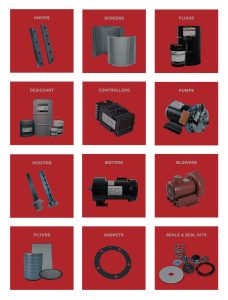
If inspection reveals worn knives, damaged screens, or other worn cutting components, using properly specified OEM replacement parts can help restore cutting performance and maintain consistent granulate quality. Parts and service assistance remain available through Cumberland’s support team.
When Sharpening Isn’t Enough
Routine knife sharpening and maintenance can significantly improve granulator performance and extend equipment life. However, there are situations where repeated maintenance issues, excessive component wear, or aging equipment may indicate that a more comprehensive rebuild should be considered.
For processors operating older granulators, refurbishment can be a cost-effective alternative to purchasing new equipment. Cumberland’s Granulator Refurbishment program completely disassembles the machine, inspects all components, and remanufactures or replaces parts as needed to restore performance, reliability, and safety features.
Rather than simply repairing failed parts, the refurbishment process addresses components that may create future issues, helping extend the life of the original investment while restoring equipment to near-new operating condition.

Keep Your Granulator Performing at Its Best
Sharp knives and proper maintenance play a critical role in granulator efficiency, regrind quality, and equipment longevity. While there is no universal sharpening schedule, monitoring indicators such as dust generation, regrind quality, amp draw, vibration, throughput, and operating noise can help determine when maintenance is needed.
By taking a proactive approach to knife maintenance and addressing issues early, processors can reduce downtime, improve cutting performance, and maximize the useful life of their size reduction equipment.
If you’re unsure whether your granulator requires knife maintenance, replacement components, or a complete rebuild, a local Cumberland representative can help evaluate your application and recommend the best path forward.